Fighting Travel Rewards Inflation in the Miles and Points Game

Frank McBride • June 26, 2023

The inflation we have experienced post-COVID is not limited to groceries, housing, and other routine expenses. There has also been inflation in travel rewards as airlines want more miles for free flights and hotel chains want more points for free rooms than in the past. Any devaluation of miles and points that you have accumulated is unwelcome, but there are ways to fight back.


  1. The first strategy is to take advantage of new credit card offerings and harvest sign-up bonuses. While there has been inflation in what airlines and hotel chains want for free travel, there has also been inflation in the sign-up bonuses offered for new cardholders. As an example, a Delta gold card I picked up about 12 years ago offered a 25,000 SkyMile bonus after meeting a spending threshold. The current offer on a Delta SkyMiles gold card is 65,000 SkyMiles. The current bonus will get you a free domestic trip (if not more) just as that 25,000-mile bonus would get you a free domestic trip. If you have gone years without taking advantage of a sign-up bonus, you are missing out.
  2. A second strategy for beating inflation is to make sure you are taking advantage of spending categories that offer the richest bonuses. Just as there has been inflation in sign-up bonuses, there has been inflation in bonuses for categories like dining, groceries, gas and other routine purchases. A decade ago, an airline card might have offered two miles per dollar spent with the airline and one mile per dollar spent for all other purchases. Some currently offered cards have bonuses of 3X, 4X, and even 5X per dollar spent which can greatly accelerate your point and mile accumulation. These high bonuses can be found on cards with quarterly rotating bonuses but also cards that offer extra points all year.
  3. Diversifying your points and miles “portfolio” is an important third strategy. Just as a diverse investment portfolio for retirement can reduce risk, you do not want to accumulate mileage or points in just one program. A great way to diversify is with flexible points, which are points offered by major card issuers that you can transfer into the miles or points of different programs. With this flexibility, if an airline or hotel program devalues its miles/points, you can use your points elsewhere to get the best value.
  4. Your points and miles will never be worth more than they are in the present so, a fourth hedge against travel rewards inflation is to simply earn and burn your points. People have told me of plans to take a major trip several years from now that will require hundreds of thousands of miles – perhaps they want to take their family to a distant and exotic location and fly business class. The problem with this hoarding approach is that, by the time they are ready to book their travel, the airline will have increased the miles needed for this dream trip.


The Travel Rewards Optimizer (TRO) plans takes these and other factors into consideration so that you can get more travel out of credit card loyalty programs while lowering your exposure to travel rewards inflation. The TRO plans provide guidance for the credit card offerings that will marry your routine spending patterns to your specific travel goals. And, because our advice includes strategies for diversification and is geared to meeting shorter term (one year) travel goals, we help you avoid travel rewards inflation so you can focus on enjoying your vacations.


By Frank McBride September 4, 2026
In case you missed them, here is your "one-stop shopping" for posts from the past week. For some, recent changes with the Resy restaurant reservation platform might limit dining options when using the credit. Learn more here . Perhaps your next US domestic award flight should be booked through . . . Air France. Check out why . The Amex Platinum card might have the highest annual fee for mass marketed cards. Find out if the benefits are worth it for my household here . Hope you have a great Labor Day weekend!! We are ready to help you turn your routine credit card spending into the travel of your dreams.
By Frank McBride September 3, 2026
A walk through one household's use of the Amex Platinum card
By Frank McBride August 28, 2026
For some domestic flights, Air France might save transferable miles
By Frank McBride August 27, 2026
Recent changes in the Resy reservations platform might limit use of the Amex dining credit
By Frank McBride June 25, 2026
Changes are a mixed bag but Hyatt regulars won't be happy
By Frank McBride June 5, 2026
Some good news in points and miles (and one warning)
By Frank McBride May 29, 2026
A change in favor of airline passengers (for a change)
By Frank McBride May 19, 2026
The Autograph Journey's transfer partner list grows slowly but steadily
By Frank McBride April 29, 2026
Points and miles free up the travel budget for pilsner, paprika, and pastizzi*
By Frank McBride April 23, 2026
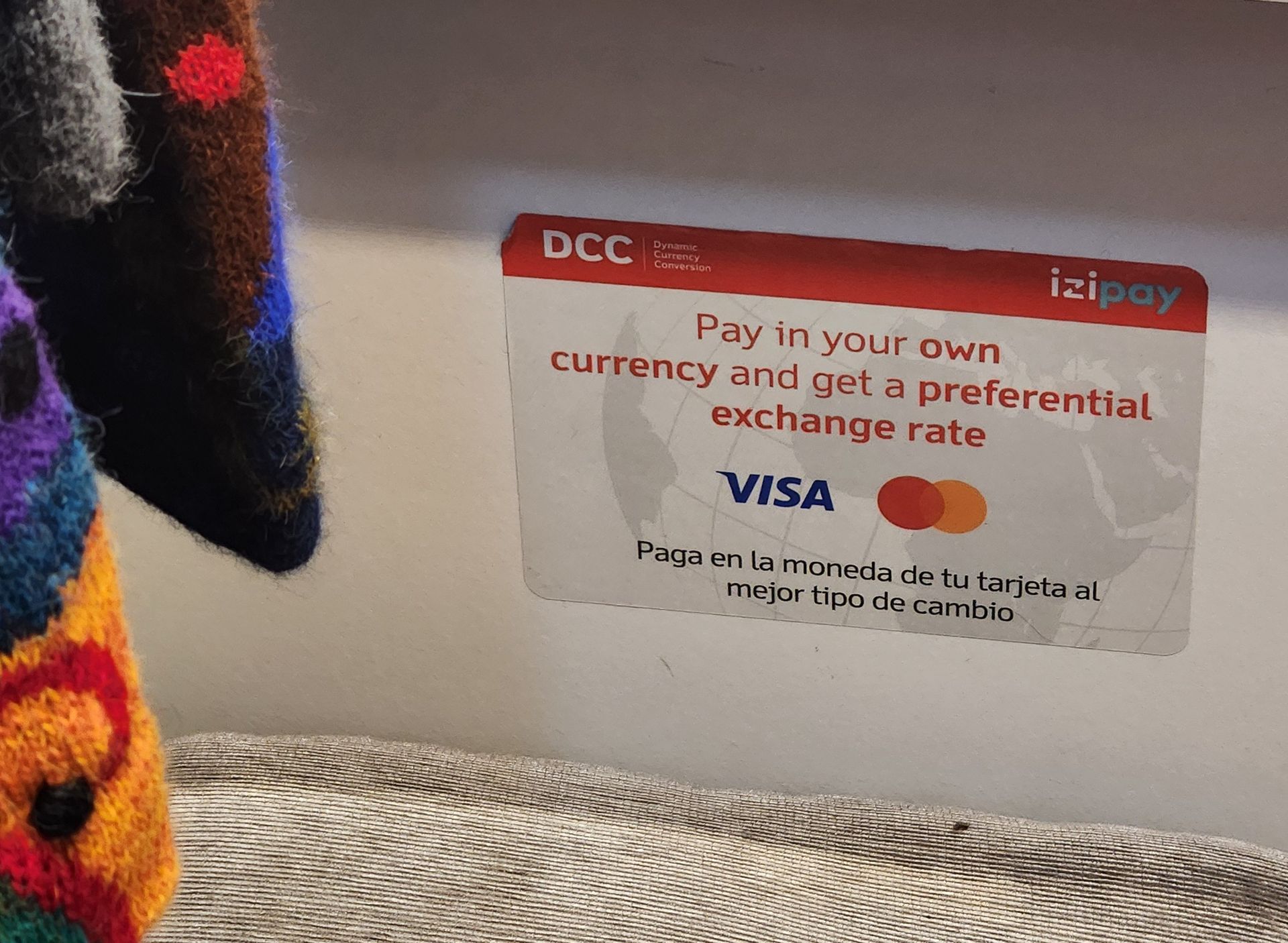
As the summer travel season approaches, this is a friendly reminder to avoid "dynamic currency conversion" (DCC) when making credit card purchases outside of your home country. DCC gives you the option of selecting a payment amount in your home currency rather than in the local currency. Typically, when presented with a credit card reader at a shop or restaurant, the touch screen will show purchase amounts in the local currency and in US dollars (for those with American credit cards) and you have the opportunity to choose. I have been seeing these “offers” for several years now and have learned, after doing a little mental math, they are almost always a bad deal for the purchaser. When presented with a credit card reader, I always choose to pay the amount shown in local currency rather than the amount shown in US dollars. During a recent trip, I was making purchases in Euros, Hungarian Forints, and Czech Korunas. From what I could tell, the option of paying in dollars inflated the cost of the purchases around an average of five percent (5%). Once, a card reader screen acknowledged that making the purchase in dollars added an eight percent (8%) fee. Even a credit card with a foreign transaction fee (which you should avoid using when traveling abroad) would have added only three percent (3%) to the tab. Currency games aside, Visa and MasterCard offer reasonable exchange rates when you choose to pay in the local currency. Upon returning home, our credit card statements showed exchange rates that were quite close to market rates. It is reasonable and fair for the credit card issuers make a fraction of a percent here and there as they are performing a service and accepting currency risk (although very briefly). But, claiming to offer a “preferential” rate to pad their bottom line is disingenuous. Because exchange rates are reasonable, using credit cards while traveling abroad is still worthwhile for a points and miles program as long as you avoid cards with foreign transaction fees. Travel oriented cards can offer 2X and 3X spending bonuses for transportation and restaurants to give you a leg up on saving money and accumulating points or miles for your next vacation.