
Just Say “No” to Offers to Pay Credit Card Charges in Dollars When Traveling Abroad
Frank McBride • July 25, 2025
Banks offer "preferential" foreign exchange rates (for themselves)
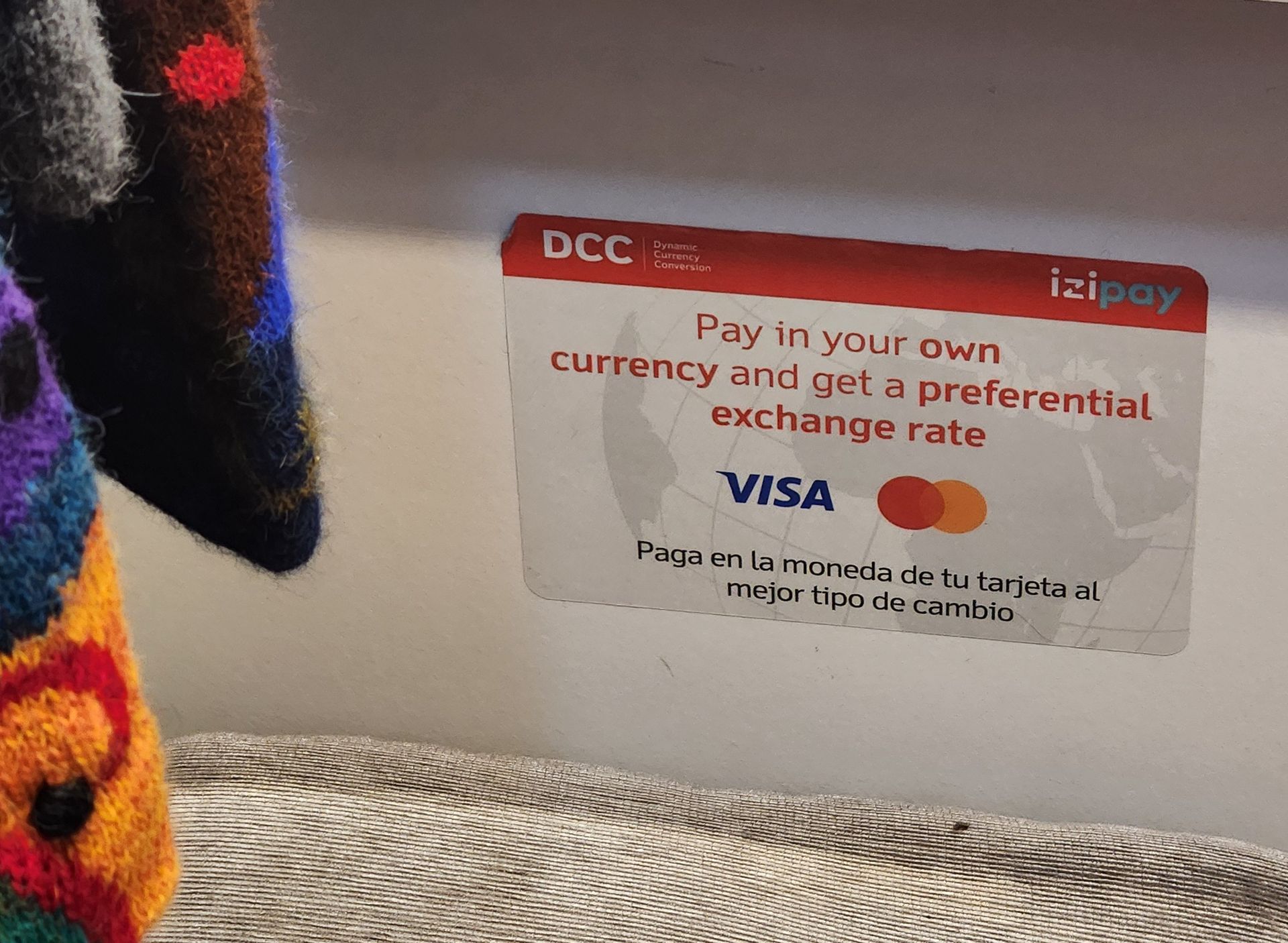
Ms. Optimizer and I do not shop a lot when we travel but, Ms. Optimizer thinks alpacas are cute and likes things made of their wool. So, we went shopping for knit products during a recent trip to Aguas Calientes, Peru. As we were about to pay, we saw the sign pictured above with an offer from Visa/MasterCard offering an opportunity to:
“Pay in your own currency and get a preferential exchange rate”
I have been seeing these “offers” for several years now and, after doing a little mental math, they are almost always a bad deal for the purchaser. When presented with a credit card reader, I always choose to pay the amount shown in local currency rather than the amount shown in US dollars.
In the case of the purchase of some alpaca blankets, I was given the choice of paying: 1) 420 Peruvian soles; or 2) a bit over $125 US dollars and chose the local currency. When I reviewed my credit card statement, the charge ended up being a little over $117. Had I taken the option of the “preferential exchange rate,” I would have paid an extra eight dollars. Even a credit card with a foreign transaction fee of 3% (which you should avoid using when traveling abroad) would have added less than four dollars to the tab.
Currency games aside, Visa and MasterCard offer reasonable exchange rates when you choose the local currency. During our trip, the exchange rate for the Peruvian sol was 3.55 soles to the US dollar. My credit card statement reflected a rate of 3.57 which is entirely reasonable. It is fair for the credit card issuers make a fraction of a percent here and there as they are performing a service and accepting currency risk (albeit briefly). But, claiming to offer a “preferential” rate to pad their bottom line is disingenuous.
Because exchange rates are reasonable, using credit cards while traveling abroad is still worthwhile for a points and miles program as long as you avoid cards with foreign transaction fees. Travel oriented cards can offer 2X and 3X spending bonuses for transportation and restaurants to give you a leg up on saving money for your next vacation.
We are ready to help you turn your routine credit card spending into the travel of your dreams.

In case you missed them, here is your "one-stop shopping" for posts from the past week. For some, recent changes with the Resy restaurant reservation platform might limit dining options when using the credit. Learn more here . Perhaps your next US domestic award flight should be booked through . . . Air France. Check out why . The Amex Platinum card might have the highest annual fee for mass marketed cards. Find out if the benefits are worth it for my household here . Hope you have a great Labor Day weekend!! We are ready to help you turn your routine credit card spending into the travel of your dreams.

A walk through one household's use of the Amex Platinum card

For some domestic flights, Air France might save transferable miles

Recent changes in the Resy reservations platform might limit use of the Amex dining credit

Changes are a mixed bag but Hyatt regulars won't be happy

Some good news in points and miles (and one warning)

A change in favor of airline passengers (for a change)

The Autograph Journey's transfer partner list grows slowly but steadily

Points and miles free up the travel budget for pilsner, paprika, and pastizzi*
As the summer travel season approaches, this is a friendly reminder to avoid "dynamic currency conversion" (DCC) when making credit card purchases outside of your home country. DCC gives you the option of selecting a payment amount in your home currency rather than in the local currency. Typically, when presented with a credit card reader at a shop or restaurant, the touch screen will show purchase amounts in the local currency and in US dollars (for those with American credit cards) and you have the opportunity to choose. I have been seeing these “offers” for several years now and have learned, after doing a little mental math, they are almost always a bad deal for the purchaser. When presented with a credit card reader, I always choose to pay the amount shown in local currency rather than the amount shown in US dollars. During a recent trip, I was making purchases in Euros, Hungarian Forints, and Czech Korunas. From what I could tell, the option of paying in dollars inflated the cost of the purchases around an average of five percent (5%). Once, a card reader screen acknowledged that making the purchase in dollars added an eight percent (8%) fee. Even a credit card with a foreign transaction fee (which you should avoid using when traveling abroad) would have added only three percent (3%) to the tab. Currency games aside, Visa and MasterCard offer reasonable exchange rates when you choose to pay in the local currency. Upon returning home, our credit card statements showed exchange rates that were quite close to market rates. It is reasonable and fair for the credit card issuers make a fraction of a percent here and there as they are performing a service and accepting currency risk (although very briefly). But, claiming to offer a “preferential” rate to pad their bottom line is disingenuous. Because exchange rates are reasonable, using credit cards while traveling abroad is still worthwhile for a points and miles program as long as you avoid cards with foreign transaction fees. Travel oriented cards can offer 2X and 3X spending bonuses for transportation and restaurants to give you a leg up on saving money and accumulating points or miles for your next vacation.