
The American Express Card Outside the US: Should You Leave Home Without It?
Frank McBride • April 4, 2025
Acceptance of American Express cards has changed in recent years
I have been traveling long enough to remember taking a small stack of American Express Travelers Cheques with me when leaving the United States. In an age with fewer ATM machines and less widespread acceptance of credit cards, travelers cheques were an insurance policy against the loss or theft of your money. Many heeded actor Karl Malden’s advice: “Don’t leave home without them.”
Use of these instruments has declined as international travelers can now rely on ATMs and credit cards much more than in the past. As American Express is very much in the credit card business, we are now advised “Don’t leave home without it.” But, American Express cards have a reputation for being less likely to be accepted than Visa and MasterCard cards, especially outside of the United States. Historically, American Express cards have charged higher fees to merchants that eat at their profit margins so understandably, merchants were less enthused about them.
So, should you “leave home without it” and just take Visa and MasterCard products?
If an American Express card is part of your program for accumulating points and miles, you should definitely take it along for several reasons.
- First, importantly, many Amex cards do not have foreign transaction fees. That should be a primary consideration for taking any credit card as these fees (often around 3%) can nullify any travel rewards benefits you would otherwise accrue.
- American Express has undertaken an aggressive campaign to get more merchants to accept their cards. In just the last decade, this effort has tripled the number of merchants outside of the US who will accept American Express cards.
- Worldwide, 119 million locations accept American Express compared to 130 million that accept Visa/MasterCard. While this 92% acceptance rate is driven by a 99% acceptance rate in the US, it is still the case that American Express cards can be used widely during international travel.
When traveling, Ms. Optimizer and I take two American Express cards:
- Amex Gold: This card delivers a 4X Amex point bonus for restaurant dining so we definitely use it at restaurants that will accept it. While the Amex Gold also gives you a 4X bonus at supermarkets, this is limited to the US, so we buy groceries with other cards when traveling abroad.
- Amex Platinum: For us, this card is almost exclusively an air travel card that we use for airline purchases, flying benefits and airline credits. We travel with this card if we are likely to want access to a Delta Sky Club or a Centurion Lounge. We are only likely to make a purchase with the card if we need to purchase airline tickets or airline fees while traveling as these purchases yield a 5X point bonus.
If you have the classic Amex Green card and its bonus structure works for you, it would be worthwhile to take it on international trips. This card also does not have foreign transaction fees and offers a 3X Amex point bonus on travel, transit, and restaurant purchases.
Because acceptance of Amex cards can vary greatly , it is important to also have a Visa/MasterCard on hand (don’t forget to make sure they do not have foreign transaction fees). And, for that matter, it is a good idea to have some cash for establishments that do not accept any credit card.
American Express cards might or might not fit into a productive travel rewards plan for you. When we design a custom Travel Rewards Optimizer plan for you, we take your travel goals, travel habits, spending patterns, and preferences into account. We want to ensure that the cards we recommend for you can quickly generate free travel and provide relevant benefits while keeping your annual card fees under control.
We are ready to help you turn your routine credit card spending into the travel of your dreams.

In case you missed them, here is your "one-stop shopping" for posts from the past week. For some, recent changes with the Resy restaurant reservation platform might limit dining options when using the credit. Learn more here . Perhaps your next US domestic award flight should be booked through . . . Air France. Check out why . The Amex Platinum card might have the highest annual fee for mass marketed cards. Find out if the benefits are worth it for my household here . Hope you have a great Labor Day weekend!! We are ready to help you turn your routine credit card spending into the travel of your dreams.

A walk through one household's use of the Amex Platinum card

For some domestic flights, Air France might save transferable miles

Recent changes in the Resy reservations platform might limit use of the Amex dining credit

Changes are a mixed bag but Hyatt regulars won't be happy

Some good news in points and miles (and one warning)

A change in favor of airline passengers (for a change)

The Autograph Journey's transfer partner list grows slowly but steadily

Points and miles free up the travel budget for pilsner, paprika, and pastizzi*
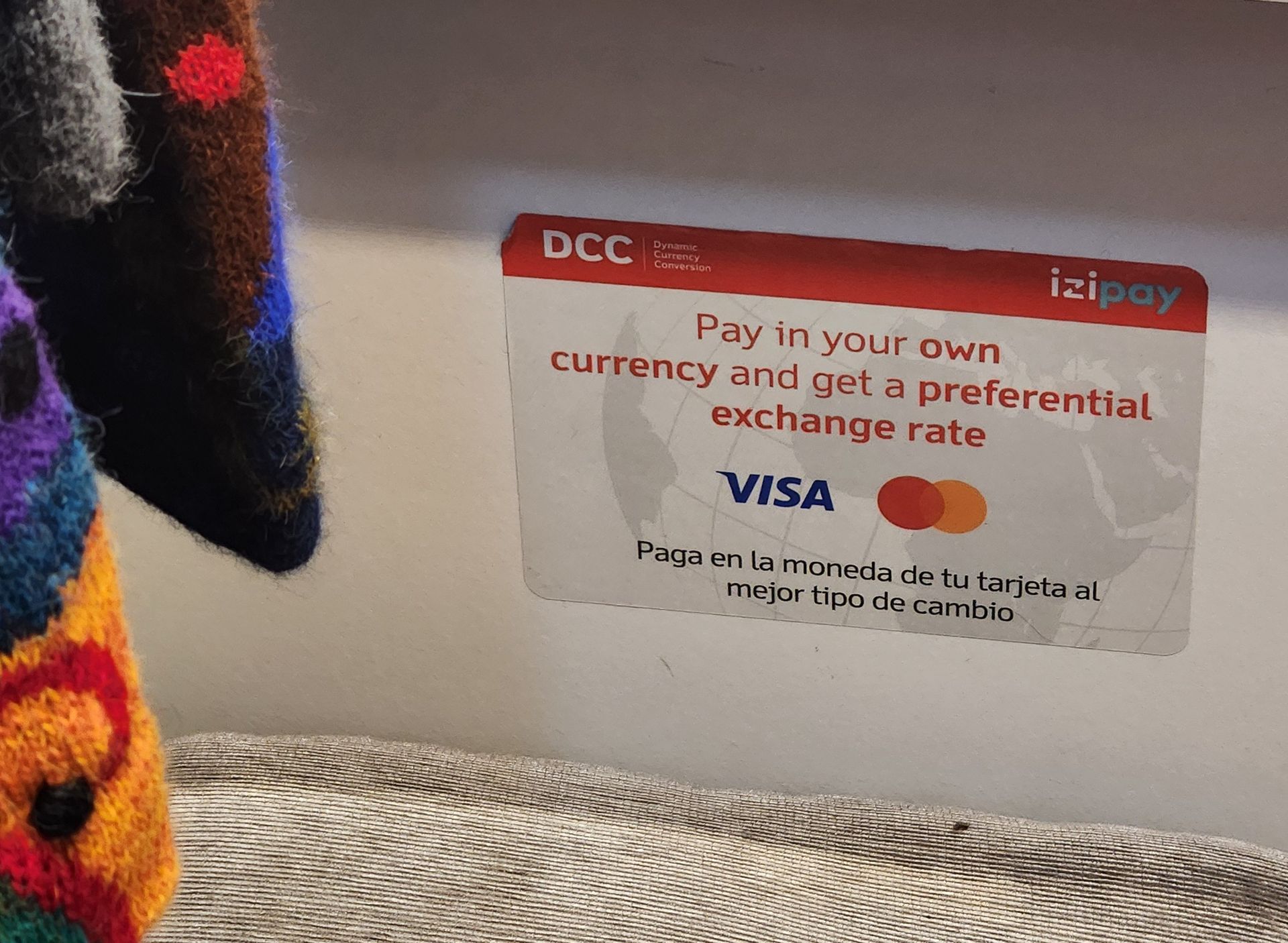
As the summer travel season approaches, this is a friendly reminder to avoid "dynamic currency conversion" (DCC) when making credit card purchases outside of your home country. DCC gives you the option of selecting a payment amount in your home currency rather than in the local currency. Typically, when presented with a credit card reader at a shop or restaurant, the touch screen will show purchase amounts in the local currency and in US dollars (for those with American credit cards) and you have the opportunity to choose. I have been seeing these “offers” for several years now and have learned, after doing a little mental math, they are almost always a bad deal for the purchaser. When presented with a credit card reader, I always choose to pay the amount shown in local currency rather than the amount shown in US dollars. During a recent trip, I was making purchases in Euros, Hungarian Forints, and Czech Korunas. From what I could tell, the option of paying in dollars inflated the cost of the purchases around an average of five percent (5%). Once, a card reader screen acknowledged that making the purchase in dollars added an eight percent (8%) fee. Even a credit card with a foreign transaction fee (which you should avoid using when traveling abroad) would have added only three percent (3%) to the tab. Currency games aside, Visa and MasterCard offer reasonable exchange rates when you choose to pay in the local currency. Upon returning home, our credit card statements showed exchange rates that were quite close to market rates. It is reasonable and fair for the credit card issuers make a fraction of a percent here and there as they are performing a service and accepting currency risk (although very briefly). But, claiming to offer a “preferential” rate to pad their bottom line is disingenuous. Because exchange rates are reasonable, using credit cards while traveling abroad is still worthwhile for a points and miles program as long as you avoid cards with foreign transaction fees. Travel oriented cards can offer 2X and 3X spending bonuses for transportation and restaurants to give you a leg up on saving money and accumulating points or miles for your next vacation.