Air France / KLM Flying Blue Program Liberalizes Expiration Policy for Miles

Frank McBride • May 29, 2026

A change in favor of airline passengers (for a change)

Airline frequent flyer programs have a range of policies addressing the expiration of their members’ frequent flyer miles.
 
In general, US carriers have the most generous policies as miles on Alaska, Delta, JetBlue, Southwest, and United
do not expire.


A second group includes American, Air Canada, Avianca, British Air, and the Air France / KLM Flying Blue program. These airlines have expirations ranging from 12 to 36 months but also offer some mechanisms for extending expirations.


Airlines in a third group including ANA, Emirates, JAL, Lufthansa, Singapore, and Turkish have “use it or lose it” hard expiration policies that do not allow for extensions (except for elite members or those willing to pay high fees).
 
While the Air France / KLM Flying Blue program falls into the second category, until recently, it had some of the less traveler friendly policies among this group. Its miles expired after 24 months. Program members could extend their expiration dates by paying for flights or making purchases on the Flying Blue co-branded credit card. However, a transfer of flexible points into your Flying Blue account would not extend the expiration date for your miles. Additionally, the miles in your account might have different expiration dates.


As of this month, the Flying Blue program will extend the expiration date on members’ miles after a simple transfer of flexible points (such as Chase Ultimate Reward or American Express Membership Rewards) into an account. Furthermore, the 24-month extension will apply to all miles in the account.


This change could not come at a better time for my household. In May of last year, Ms. Optimizer and I used Air France miles to purchase a trip to Prague. After booking this awards flight, the price for our itinerary in miles decreased by 62,000 points. Based on previous experience, these miles would be worth $1200-1500 so it was worth it to pay the change fee (140 euros or about $162 US) to recover these miles. But, of course, these 62,000 miles could only be used with Air France, and they had a two-year time limit before they expired and became worthless.
 
With the new policy, I simply transferred 1,000 American Express points to my Flying Blue account. After only a few minutes – voila – the 1,000 miles appeared in my account, and the new expiration date is now two years off.


When keeping points or miles long term (more than a year) be aware of their expiration date, if any. One of the greatest sins of the points and miles game is simply letting a “currency” expire. One thing we provide Travel Rewards Optimizer clients with is a spreadsheet template for managing their cards, points/miles, redemptions, and importantly, expiration dates of points or miles.


So many recent policy changes in the points and miles game have been about either increasing prices or taking things away from travelers. But, this change in the Air France / KLM Flying Blue program is a welcome news and will help many travelers utilize this program more efficiently.


We are ready to help you turn your routine credit card spending into the travel of your dreams.

By Frank McBride • September 21, 2026
Chase is about to devalue Chase UR point to World of Hyatt point transfers
By Frank McBride • September 4, 2026
In case you missed them, here is your "one-stop shopping" for posts from the past week. For some, recent changes with the Resy restaurant reservation platform might limit dining options when using the credit. Learn more here . Perhaps your next US domestic award flight should be booked through . . . Air France. Check out why . The Amex Platinum card might have the highest annual fee for mass marketed cards. Find out if the benefits are worth it for my household here . Hope you have a great Labor Day weekend!! We are ready to help you turn your routine credit card spending into the travel of your dreams.

By Frank McBride • September 3, 2026
A walk through one household's use of the Amex Platinum card
By Frank McBride • August 28, 2026
For some domestic flights, Air France might save transferable miles
By Frank McBride • August 27, 2026
Recent changes in the Resy reservations platform might limit use of the Amex dining credit
By Frank McBride • June 25, 2026
Changes are a mixed bag but Hyatt regulars won't be happy
By Frank McBride • June 5, 2026
Some good news in points and miles (and one warning)
By Frank McBride • May 19, 2026
The Autograph Journey's transfer partner list grows slowly but steadily
By Frank McBride • April 29, 2026
Points and miles free up the travel budget for pilsner, paprika, and pastizzi*
By Frank McBride • April 23, 2026
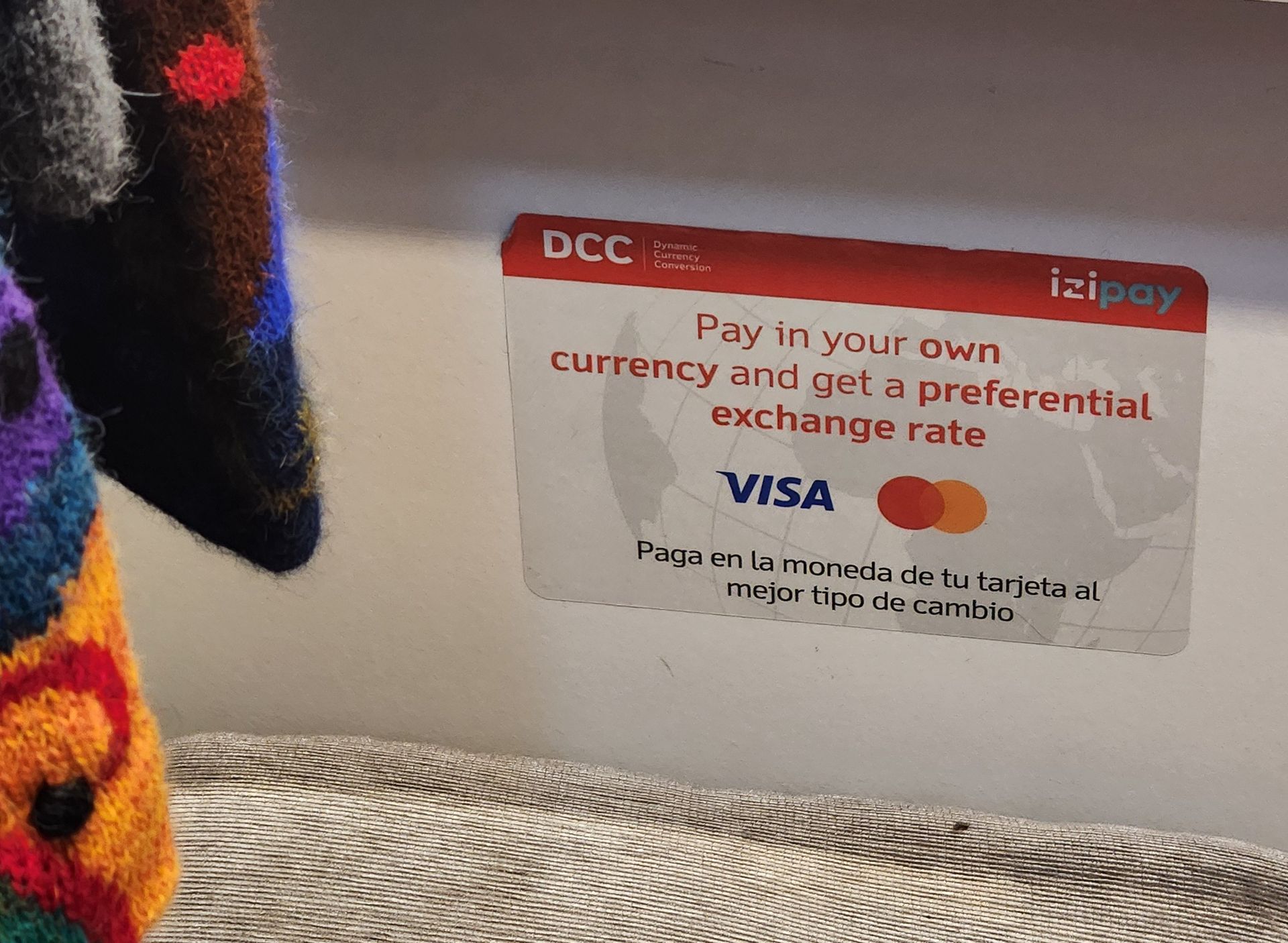
As the summer travel season approaches, this is a friendly reminder to avoid "dynamic currency conversion" (DCC) when making credit card purchases outside of your home country. DCC gives you the option of selecting a payment amount in your home currency rather than in the local currency. Typically, when presented with a credit card reader at a shop or restaurant, the touch screen will show purchase amounts in the local currency and in US dollars (for those with American credit cards) and you have the opportunity to choose. I have been seeing these “offers” for several years now and have learned, after doing a little mental math, they are almost always a bad deal for the purchaser. When presented with a credit card reader, I always choose to pay the amount shown in local currency rather than the amount shown in US dollars. During a recent trip, I was making purchases in Euros, Hungarian Forints, and Czech Korunas. From what I could tell, the option of paying in dollars inflated the cost of the purchases around an average of five percent (5%). Once, a card reader screen acknowledged that making the purchase in dollars added an eight percent (8%) fee. Even a credit card with a foreign transaction fee (which you should avoid using when traveling abroad) would have added only three percent (3%) to the tab. Currency games aside, Visa and MasterCard offer reasonable exchange rates when you choose to pay in the local currency. Upon returning home, our credit card statements showed exchange rates that were quite close to market rates. It is reasonable and fair for the credit card issuers make a fraction of a percent here and there as they are performing a service and accepting currency risk (although very briefly). But, claiming to offer a “preferential” rate to pad their bottom line is disingenuous. Because exchange rates are reasonable, using credit cards while traveling abroad is still worthwhile for a points and miles program as long as you avoid cards with foreign transaction fees. Travel oriented cards can offer 2X and 3X spending bonuses for transportation and restaurants to give you a leg up on saving money and accumulating points or miles for your next vacation.